

Nordic Japanese Cuisine Guide for Oslo Diners
- cgiinternationalin
- 5 days ago
- 6 min read
The first sign that a restaurant understands this style is often restraint. Not less ambition, but more control. A serious nordic japanese cuisine guide begins there - with a kitchen that knows when to leave an ingredient almost untouched, and when to apply technique with exacting purpose.
For diners in Oslo, the appeal is clear. Nordic produce offers cold-water clarity, mineral freshness, and a natural relationship with the seasons. Japanese culinary thinking brings discipline, structure, and an unusually precise understanding of texture, temperature, and balance. When these traditions meet well, the result is not novelty. It is a cuisine of focus.
What a nordic japanese cuisine guide should actually explain
The term is used broadly, sometimes too broadly. Not every menu that serves raw fish with local herbs belongs in this category. A more accurate reading is that Nordic Japanese cuisine is built on two commitments: respect for product and respect for form.
From the Nordic side, this means deep attention to provenance, seasonality, and purity of flavour. Ingredients are often used at their peak and handled with minimal excess. From the Japanese side, it means a codified seriousness around cut, timing, seasoning, broth work, fermentation, rice, and service rhythm. One tradition contributes landscape. The other contributes method.
The best versions do not split the difference halfway. They are more exact than that. A scallop may remain recognisably Nordic in origin and flavour, yet be framed through Japanese knife work, acidity, and temperature. A broth may rely on local shellfish or mushrooms, but carry the quiet architecture of dashi. This is not fusion in the casual sense. It is composition.
The ingredients define the standard
If there is one place where this cuisine reveals its integrity, it is sourcing. Luxury in this context does not begin with decoration. It begins with the quality of seafood, the condition of shellfish, the fat content of the fish, the sweetness in a just-harvested root vegetable, the fragrance of herbs picked in season.
Cold northern waters make seafood an especially natural foundation. Langoustine, scallop, oyster, king crab, turbot, cod, and mackerel all sit comfortably within a Japanese framework because they reward precision. Raw preparations, light curing, steaming, grilling, and broth-based dishes all depend on the ingredient being exceptional before the chef intervenes.
That said, premium product alone is not enough. Caviar, uni, wagyu, or truffle can elevate a dish, but they can also flatten it if used only as shorthand for luxury. In a disciplined dining room, expensive ingredients are applied selectively. They should sharpen a dish, not drown it.
Technique is where the cuisine either holds or collapses
Many restaurants can speak fluently about seasonality. Fewer can execute Japanese technique at a level that justifies the comparison. This matters because Nordic ingredients are often subtle. Without technical precision, subtlety becomes vagueness.
Rice is a useful example. In a tasting menu with nigiri or rice-led courses, the standard is unforgiving. Grain selection, washing, hydration, cooking, resting, seasoning, and service temperature all affect the final expression. Excellent fish placed on poorly judged rice immediately exposes imbalance.
The same is true of sashimi. The cut determines not only appearance but bite, release of fat, and how the fish carries soy, citrus, or a brushed seasoning. Broth work is equally revealing. A clear, elegant liquid may look simple, yet demand more discipline than a heavily reduced sauce.
In Nordic Japanese cooking, fermentation often plays a quiet but important role. Vinegars, miso, cured elements, pickled stems, or koji-based preparations can introduce depth without heaviness. The trade-off is that these components must remain measured. Overuse can make a menu feel clever rather than calm.
Why the tasting menu suits this style
A la carte dining can showcase the cuisine, but the set-menu format is often the more natural home. It allows the kitchen to control progression, pacing, and contrast. That is especially valuable when a meal is built around texture shifts, seasonal nuance, and courses that move from raw to warm, from bright to deeper, from saline precision to a more rounded finish.
An 8-plus serving format works well because it gives enough space for the cuisine to speak in full sentences. Snacks can establish tone and acuity. Sashimi can introduce product quality without disguise. Nigiri can test the kitchen's confidence. A composed warm course can broaden the register, while a main can bring more structure without breaking the meal's overall poise.
For the guest, this structure removes a common problem in high-end dining: too much choice where curation should lead. A strong tasting menu says that the restaurant has already done the intellectual work. Your role is not to construct the meal. It is to experience it.
Pairings should support, not perform
Drinks matter greatly in this style, but not always in the way guests expect. The instinct is often to think first of sake, and there are good reasons for that. Sake can mirror umami, handle raw fish with grace, and sit gently beside delicate courses. Yet wine can be equally persuasive, particularly when the list is built around acidity, texture, and mineral length rather than sheer power.
Champagne, precise white Burgundy, German Riesling, Jura whites, and selected oxidative styles can all work beautifully depending on the menu. For some guests, a mixed pairing is the most intelligent route - sake where it brings textural harmony, wine where it adds shape or lift.
The key is proportion. Pairings should extend the logic of the food. If the beverage service becomes louder than the plate, the evening loses coherence. In refined hospitality, guidance is as important as selection.
How to read a restaurant before you book
A useful nordic japanese cuisine guide is not only about the food. It should also help diners recognise the difference between a serious culinary destination and a restaurant borrowing the language of one.
Look first at the menu format. A tightly edited tasting menu usually signals confidence, especially when it changes with season and market availability. Broad menus with many unrelated references may indicate a weaker point of view.
Then consider how the restaurant describes its ingredients. Provenance should feel specific rather than ornamental. Good restaurants know where their seafood comes from, why a certain producer matters, and how that choice affects flavour.
Service style is another marker. In this category, hospitality should feel calm, informed, and intentional. Guests who know fine dining can sense quickly whether the floor team understands rhythm, pairing logic, and the emotional pace of an evening.
In Oslo, where expectations for premium dining continue to rise, this distinction matters. Restaurants such as Substans have helped define a more complete version of the experience - one where chef-led precision and polished front-of-house hospitality are treated as inseparable.
What guests should expect from the experience
The strongest meals in this category are immersive without becoming theatrical. You should expect a sense of progression, but not unnecessary explanation. You should notice detail, but not feel pressed to admire detail for its own sake.
Courses are often smaller than in classical European fine dining, yet the cumulative effect can be substantial. Much depends on sequencing. A meal that starts with pristine raw seafood and elegant snacks may build toward richer marine flavours, grilled elements, or a composed main that introduces greater depth. Dessert, if handled well, offers relief rather than interruption.
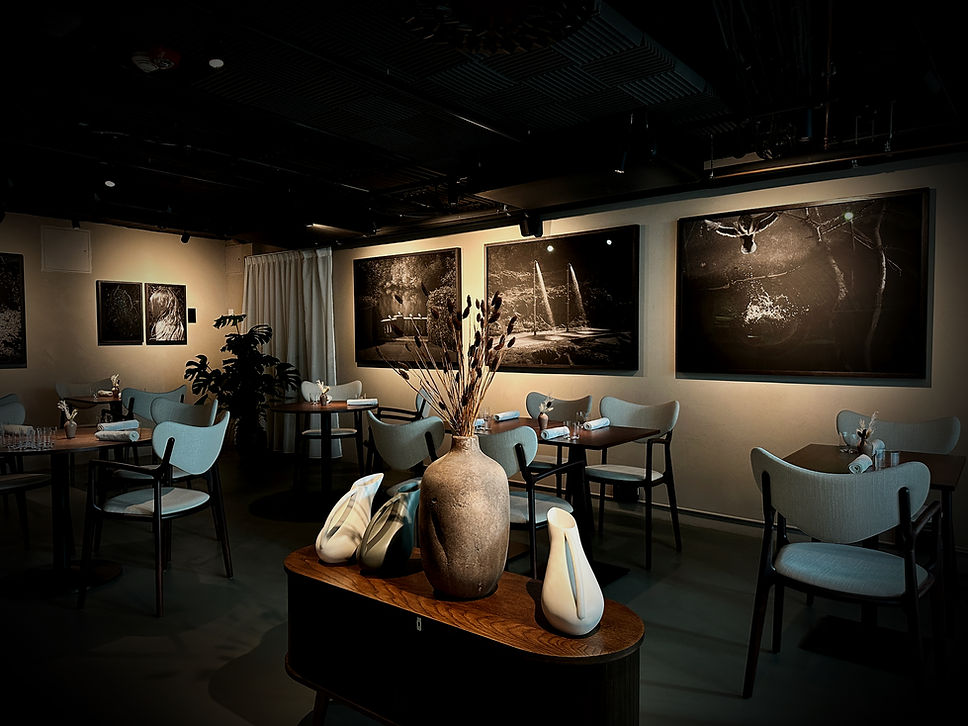
Atmosphere matters too. This cuisine benefits from rooms that allow concentration - intimate spaces, controlled lighting, and service that is present but never intrusive. It is not austere, but it is rarely casual.
The style works best when identity stays clear
There is a temptation in any cross-cultural cuisine to chase endless novelty. The better approach is narrower and more exacting. A restaurant does not need to show every possible Nordic ingredient or every Japanese technique in one sitting. It needs to present a clear philosophy and hold it through the entire evening.
That may mean a menu that is predominantly seafood-driven. It may mean very limited service windows to preserve consistency. It may mean declining to expand in ways that dilute control. For diners, these constraints are often a strength rather than a limitation.
What makes this cuisine compelling is not contrast alone. It is alignment. Nordic ingredients already carry a natural elegance. Japanese sensibility gives that elegance structure, rhythm, and tension. When the two are handled with maturity, the meal feels inevitable, as if no other format would have served the product better.
If you are choosing where to spend a significant evening in Oslo, look for that sense of inevitability. The finest expression of this cuisine does not ask to impress you at every turn. It asks for your attention, and then rewards it course by course.



Comments