

How to Choose Tasting Menu the Right Way
- cgiinternationalin
- May 13
- 6 min read
A tasting menu rarely fails because of the food alone. More often, the mismatch begins earlier - with expectations. You book for celebration, curiosity, or indulgence, but the menu in front of you may be playful when you wanted precise, heavy when you wanted light, or broad when you wanted a point of view. If you are wondering how to choose tasting menu options well, the real task is to choose the restaurant’s philosophy as much as the meal itself.
In fine dining, a set menu is not simply a sequence of courses. It is a controlled expression of season, technique, sourcing, and hospitality. The best choices come from understanding what kind of evening you want, and then recognising which kitchen is built to deliver exactly that.
How to choose tasting menu by restaurant style
The first question is not price, length, or even prestige. It is style. A tasting menu should feel coherent from the first snack to the final pour, and coherence comes from culinary identity.
Some restaurants build their menus around classical French structure, where sauces, richness, and progression carry the evening. Others are led by Japanese restraint, where temperature, knife work, rice, broth, and timing matter more than overt complexity. Others still work from a Nordic approach, with sharp seasonality, preservation, clean flavours, and a stronger emphasis on ingredient purity.
For a guest, this matters because style shapes every practical detail. A seafood-led menu will feel different from a game-heavy winter menu. A kitchen rooted in Japanese technique may deliver greater precision and quieter flavours than one focused on rustic abundance. Neither is inherently better. The right choice depends on whether you want comfort, theatre, delicacy, or intellectual clarity on the plate.
If a restaurant’s description feels broad enough to please everyone, that is usually a sign to look more closely. The strongest tasting menus tend to be specific. They may not suit every diner, but they reward the right one.
Read the menu for structure, not just ingredients
Guests often scan a tasting menu for luxury cues - caviar, langoustine, wagyu, truffle. Those ingredients can signal quality, but they do not tell you whether the meal is well judged. Structure tells you more.
Look at the balance across the menu. Is there a natural rhythm between colder and warmer dishes, lighter and deeper flavours, raw and cooked preparations? Does the menu suggest control, or does it read like a collection of expensive ideas? A good tasting menu has tension and release. It should sharpen your attention early, build depth in the middle, and finish with enough lift that you leave satisfied rather than fatigued.
This is especially relevant with longer menus. Eight courses can feel elegant in one dining room and excessive in another. The difference is pacing and composition. If several dishes seem rich on paper, the evening may become heavy unless the kitchen is skilled at contrast. If many courses are raw, chilled, or highly delicate, the meal may feel too narrow unless there is sufficient variation in texture and temperature.
A disciplined menu shows editing. That is often a better sign than abundance.
Seasonality is more than a selling point
Seasonality is frequently mentioned, but not always meaningfully. In a serious restaurant, seasonal cooking is not decoration. It guides the menu’s tone.
In spring and early summer, you may expect more clarity, salinity, green notes, and a lighter hand with sauce and garnish. In colder months, the menu may lean further into stock, smoke, roast, fermentation, and deeper textures. This should feel deliberate rather than cosmetic.
If you know what season you are dining in, ask whether the restaurant’s style suits that moment. Some kitchens are at their best when the produce is austere and demand more technique to reveal depth. Others shine when ingredients are naturally expressive and need very little intervention. Knowing this can help you choose a meal that feels not just luxurious, but timely.
Consider your appetite for curation
One of the pleasures of a tasting menu is surrender. The kitchen leads, and you follow. But not every guest wants the same degree of control removed.
If you enjoy being guided, a tightly curated menu with few choices will often produce the strongest result. It allows the restaurant to choreograph every transition, align pairings more precisely, and maintain consistency across the room. This is where chef-led restaurants often excel. Their confidence comes from limitation, not expansion.
If, however, you are a diner who values significant choice, a tasting menu may not always be the best format for the evening. That is not a criticism of the menu. It simply means that curation works best when the guest is willing to enter the restaurant’s logic.
This is worth thinking about for special occasions. Some celebrations call for surprise and trust. Others call for ease, flexibility, and a broader menu. Choosing well means being honest about which kind of night you actually want.
How to choose tasting menu with dietary needs
Dietary considerations should never be an afterthought. In fine dining, they can materially change the menu’s architecture.
A seafood-forward tasting menu, for example, may be deeply compelling for the right guest and structurally difficult for someone who does not eat fish. A kitchen may accommodate vegetarian dining with care, but that does not always mean the alternative menu carries the same identity as the original. In some restaurants, adaptation is handled elegantly. In others, it can feel secondary.
The right approach is to assess alignment, not just accommodation. If the restaurant’s strengths are built around raw fish, shellfish, broth work, and marine seasonality, then a guest who loves those things is likely to experience the menu at its fullest. If your restrictions remove the very foundation of the cuisine, the fit may be less natural even if the service team is accommodating.
This is one area where clarity matters more than optimism. A well-run restaurant will respect that.
Many guests treat wine or beverage pairings as an add-on. In reality, they often define the pace and mood of the night.
A well-judged pairing does more than match flavour. It resets the palate, sharpens contrast, and gives individual courses more dimension. This is particularly important in menus that rely on precision and subtle transitions rather than obvious richness. Sake, Champagne, white Burgundy, oxidative styles, or restrained non-alcoholic pairings can each steer the meal in a different direction.
At the same time, pairings add length and intensity. If you want a lighter evening, ordering selectively may be the better choice. If you want the full expression of the restaurant’s point of view, a curated pairing can make the menu feel more complete.
The question is not whether pairings are worth it in general. It is whether they suit your purpose that night.
Judge the experience beyond the plate
A tasting menu is as much about service and environment as food. Precision on the pass means little if the room feels rushed, stiff, or inattentive.
Before booking, consider the kind of hospitality the restaurant appears to offer. Is the service formal or conversational? Is the meal designed as a focused sitting, or as a longer evening that may continue into another space for drinks or petits fours? Does the restaurant seem interested in volume, or in control?
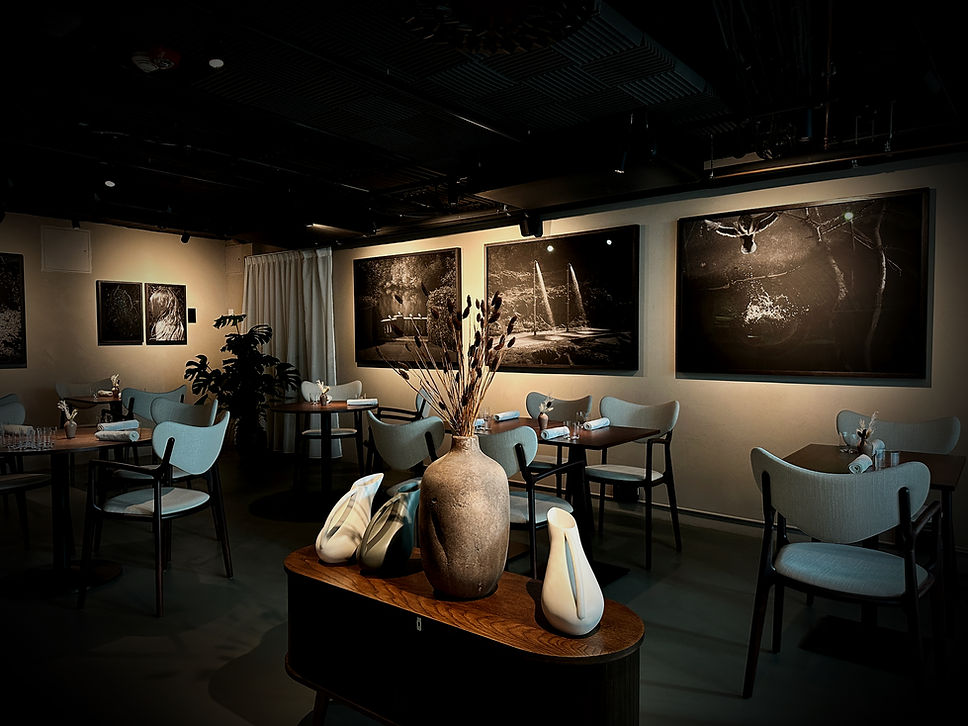
For guests accustomed to high-end dining, these details often matter more than novelty. The best evenings have calm. Courses arrive with intent. Explanations are measured. The room has rhythm, but never pressure. If the restaurant positions the tasting menu as a complete evening rather than a sequence of dishes, that is often a strong sign.
In Oslo, where guests increasingly look for chef-led experiences with international polish, that distinction carries weight. A restaurant such as Substans appeals precisely because the menu, the sourcing, and the hospitality are designed as one continuous expression rather than separate components.
Price should reflect depth, not only luxury ingredients
A premium tasting menu should cost more than a casual dinner. That is expected. The more useful question is what you are paying for.
Value in this category comes from several layers at once: ingredient quality, technical labour, service density, beverage knowledge, and the discipline required to execute a limited menu at a high level night after night. A menu can be expensive because it is lavish, but the more memorable ones are expensive because they are exact.
This is why price comparison between restaurants can be misleading. One venue may offer more courses, but less precision. Another may serve fewer plates, but each one carries greater refinement and better pacing. When choosing, look for depth of thought rather than numerical abundance.
A tasting menu should feel complete, not crowded.
The best choice is the one that matches your intention
If you are booking for a birthday, an anniversary, a business dinner, or a personal indulgence, say that clearly to yourself before you reserve. A tasting menu is never neutral. It creates a mood, asks for time, and rewards attention.
Choose the menu that fits your appetite for precision, your comfort with curation, your interest in seasonality, and the level of ceremony you want from the evening. When those elements align, the meal feels effortless. Not because it was simple, but because every detail was working in the same direction.
The right tasting menu should leave you with the sense that nothing needed to be added, and nothing should have been taken away.


Comments