

What Are the Best Seafood Dishes?
- cgiinternationalin
- Apr 16
- 6 min read
Updated: Apr 24
A perfect oyster tells you almost everything. Temperature, salinity, texture, handling, timing - seafood leaves very little room for disguise. That is why the question what are the best seafood dishes is less about popularity and more about precision. The finest dishes do not overwhelm fish and shellfish. They clarify them.
For diners who value craft, the best seafood dishes share a common discipline. They respect seasonality, they understand structure, and they know when restraint matters more than invention. Some are centuries old. Others feel contemporary because technique has become more exact. In both cases, quality begins with the ingredient and only improves through measured intervention.
What are the best seafood dishes in refined dining?
The most convincing seafood dishes tend to fall into a few distinct categories. Some celebrate purity in nearly raw form. Others use heat to deepen sweetness or create contrast. A third group relies on broth, rice, or sauce to carry marine depth without burying it. What separates a great seafood dish from an expensive one is balance.
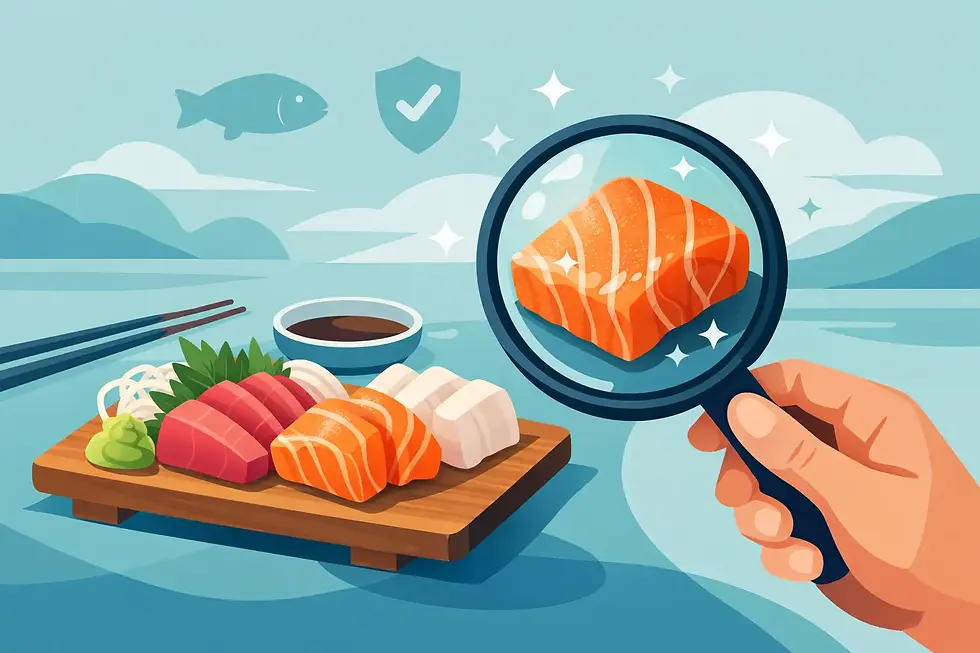
Sashimi belongs near the top of any serious answer. At its best, it is the purest expression of seafood because there is almost nowhere to hide. Knife work matters, but so does fat content, maturation, temperature, and cut. Turbot, scallop, langoustine, tuna, mackerel, and sea bream all behave differently on the palate. A great sashimi course understands that white fish asks for delicacy, while richer fish can support a more assertive accent such as citrus, soy, or a precise touch of wasabi.
Nigiri deserves equal consideration, though it is often misunderstood as simple. The balance between seafood and rice is exacting. The rice must be correctly seasoned and held at the right temperature. The topping must match the grain, not dominate it. A fine piece of nigiri feels complete in one bite, whether it is topped with prawn, lightly cured salmon, or a slice of line-caught fish brushed with nikiri.
Oysters remain one of the great benchmarks. They can be served almost unadorned, or with a restrained mignonette, a cool granita, or a light infusion that sharpens their natural salinity. The trade-off is obvious: the better the oyster, the less one should interfere. With lesser shellfish, chefs often try to compensate through garnish. With exceptional shellfish, confidence appears as restraint.
Shellfish where sweetness leads
Some of the best seafood dishes are built around sweetness rather than salinity. Hand-dived scallops, just warmed through, show this beautifully. They need caramelisation, but not excess. Too little heat and the texture stays watery. Too much and their tenderness disappears. The ideal scallop course often relies on one clean contrast - perhaps brown butter, a light dashi, roe, or a sharp green element.
Lobster can be magnificent, though it is often mishandled. It rewards exact cooking and suffers from heavy sauces. Butter is classic for a reason, but the best preparations use it with discipline. Grilled lobster with gentle smoke, poached lobster with shellfish glaze, or chilled lobster with a bright acidic dressing can all work. What matters is that the flesh remains sweet, springy, and distinct.
Langoustine may be even more elegant. Its flavour is finer, and that very refinement makes it vulnerable. Raw langoustine with citrus and oil can be extraordinary. So can a barely cooked tail served with bisque or fermented cream. The margin for error is narrow, which is precisely why it remains a mark of serious kitchen control.
The best seafood dishes are often shaped by broth and rice
Not every great seafood dish depends on raw purity. Some of the most memorable plates are defined by how they absorb and carry marine flavour. Bouillabaisse is a good example. In poor hands, it can become heavy and diffuse. In skilled hands, it is layered, aromatic, and exact, with saffron, fennel, stock, and fish working in sequence rather than all at once.
Paella, too, can be superb, though it depends entirely on discipline. Rice must be distinct. Shellfish must not overcook while the pan reaches proper concentration. The flavour should come from stock, fond, and timing - not from salt or excess garnish. A deeply flavoured seafood rice dish can feel generous without becoming blunt.
Risotto with shellfish asks for similar judgment. The challenge here is proportion. Rice should carry the dish, not drown the seafood. Prawn tartare, crab, mussels, or cuttlefish can all work if their character remains recognisable. When everything is folded into one creamy mass, the result may be comforting, but it is rarely one of the best seafood dishes.
Japanese chawanmushi with crab or shrimp offers a different kind of luxury. It relies on texture more than richness, using custard as a quiet frame for seafood stock and delicate shellfish. This kind of dish rarely seeks spectacle, yet it often lingers in memory because of its calm precision.
Fried and grilled classics, when done properly
There is no need to dismiss simpler formats. Fried seafood can be exceptional, but only when the coating protects rather than smothers. Tempura is the clearest example. The batter must be fragile, never dense, and the ingredient inside must remain clear in flavour. Prawn tempura done at a high level has lift, sweetness, and almost no grease.
Fish and chips, at its best, deserves more respect than it often receives. Excellent white fish, fresh oil, correct batter aeration, and proper seasoning can produce a dish of genuine quality. It is not refined in the tasting-menu sense, but refinement is not the only measure of greatness. The question is whether the technique honours the fish.
Grilling may be the oldest answer to what are the best seafood dishes, and still one of the strongest. Whole turbot on the bone, grilled over steady heat, develops a depth that filleted fish rarely achieves. The same is true of monkfish, octopus, or mackerel. Fire adds bitterness and sweetness at once, but only if the cook understands fat, thickness, and resting time.
What makes a seafood dish truly great?
Ingredient quality is the obvious answer, but not the complete one. Great seafood cooking also depends on timing, maturity, and format. Not every fish is best the day it arrives. Some benefit from careful aging. Others must be served immediately. Shellfish may need purging, live handling, or a specific holding temperature to remain pristine.
Sauce is another dividing line. With meat, sauce can dominate and still feel coherent. With seafood, that is riskier. The best sauces around seafood tend to sharpen, deepen, or echo. Beurre blanc, dashi-based emulsions, shellfish reductions, light broths, and clear oils often succeed because they support structure without masking the flesh.
Acidity matters more than many diners realise. Lemon is only one option. Citrus kosho, rice vinegar, fermented gooseberry, sorrel, green strawberry, and restrained pickling can all bring seafood into focus. Too much acid, however, erases sweetness and makes fine fish feel generic. The best chefs know exactly where that line sits.
Texture may be the final test. Seafood asks for precision because overcooking changes everything quickly. A scallop becomes cottony. Lobster turns tight. White fish flakes dry. Even raw preparations can fail if sliced poorly or served too cold. The best seafood dishes feel alive in texture, whether raw, steamed, grilled, or lightly fried.
Classic dishes and modern plates
Classics endure because they solved the problem of seafood long ago. Oysters on ice, sole meunière, bouillabaisse, grilled langoustines, crab with brown butter, and properly made sushi remain standards for a reason. They are not protected by nostalgia. They simply work.
Modern seafood dishes can be just as compelling when innovation has purpose. A Nordic-Japanese approach, for example, might pair pristine local fish with curing, broth work, or knife precision drawn from Japanese technique. When successful, that combination does not feel fusion-led for its own sake. It feels exact. In Oslo, restaurants such as Substans have shown how naturally these traditions can meet through seasonality, seafood quality, and a restrained culinary language.
So what are the best seafood dishes? The honest answer depends on the ingredient, the setting, and the skill behind the pass. A perfect oyster may be greater than an elaborate lobster course. A precise bowl of fish broth may outshine a luxury garnish. The finest seafood dishes are not necessarily the richest or the most intricate. They are the ones that leave the sea intact, while making it clearer, deeper, and more memorable with every bite.
The next time you choose seafood, look past reputation and toward intent. Ask whether the dish is trying to impress you, or whether it is confident enough to let the ingredient speak first.


Comments