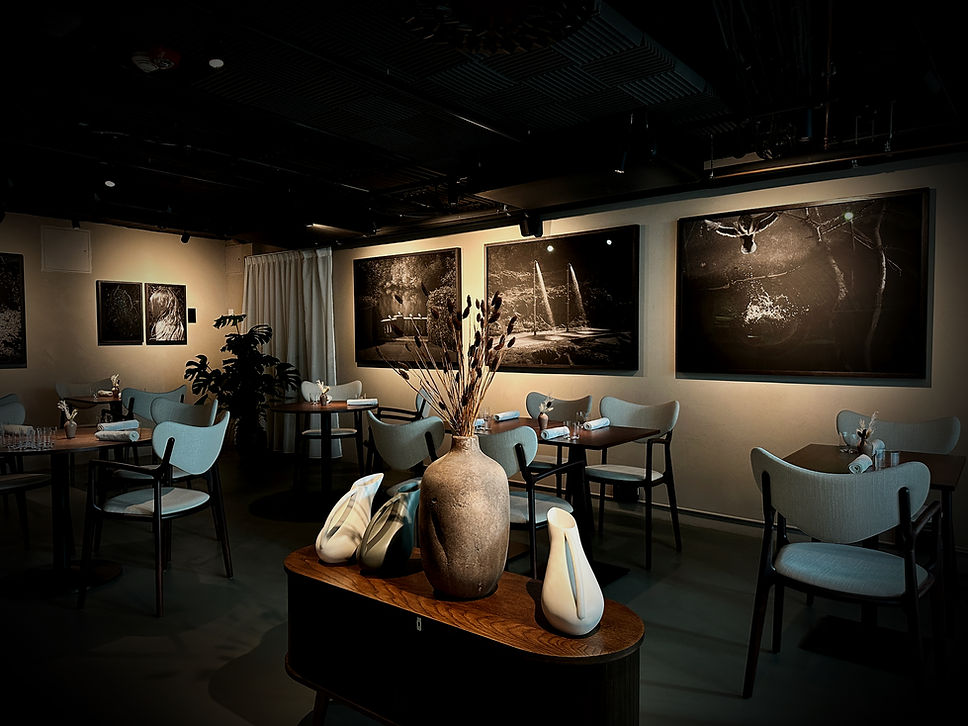


How to Choose the Best Seafood Tasting Menus
- cgiinternationalin
- 7 days ago
- 6 min read
A truly memorable seafood-led dinner rarely begins with the first bite. It begins with expectation - the sense that each course has been considered not only for flavor, but for sequence, temperature, texture, and mood. That is what separates the best seafood tasting menus from restaurants that simply serve excellent fish. The difference lies in curation.
For guests in Oslo who value chef-led dining, this distinction matters. Seafood can be treated casually, with freshness doing most of the work, or it can be handled with the kind of precision that reveals depth in every cut, cure, broth, and garnish. In a tasting format, there is nowhere to hide. Each serving must justify its place.
What defines the best seafood tasting menus
At the highest level, a seafood tasting menu is not just a collection of marine ingredients. It is a controlled progression. The menu should move with intention, often beginning with lighter, cleaner expressions before building toward richer preparations and more pronounced umami.
That progression sounds simple, but it requires discipline. Raw shellfish, sashimi, lightly cured fish, warm broth, grilled or roasted courses, and a composed main each ask for different handling. The kitchen must understand restraint as well as technique. Too much acidity early on can flatten the palate. Too much richness too soon can make the latter half of the meal feel heavy.
The best menus also respect the natural character of the product. Turbot, scallop, langoustine, trout, oyster, or cod each carry their own structure and sweetness. Serious seafood cooking does not mask that identity. It frames it.
Seasonality matters more than variety
Many diners still assume that a stronger tasting menu is a longer menu, or one with more luxury ingredients listed on the page. In practice, breadth is less important than timing. A shorter sequence built around seafood at its seasonal peak will usually feel more refined than an ambitious menu assembled without regard for water temperature, harvest conditions, or origin.
In the Nordic context, seasonality creates particular clarity. Cold-water seafood has a firmness and purity that benefit from careful treatment, especially when Japanese technique is involved. A scallop served nearly bare, with a measured accent of citrus or dashi, can carry more complexity than a heavily composed plate built to impress visually.
This is one reason provenance matters. Guests do not need a lecture at the table, but they should feel that ingredients have been chosen rather than merely purchased. The source of the oyster, the cut of the fish, the maturity of the roe, and the timing of delivery all shape the final experience.
Why restraint is often the mark of confidence
The strongest seafood tasting menus tend to avoid excess. Not because luxury is unwelcome, but because seafood is one of the easiest categories to overwork. Heavy sauces, multiple purees, aggressive smoke, and unnecessary sweetness can quickly blur detail.
Restraint, in this setting, is not minimalism for its own sake. It is confidence in product and process. A chef who knows precisely how to age fish for texture, how to season rice for nigiri, or how to clarify a broth until it tastes transparent is making a different kind of statement than one who builds drama into every plate.
That difference is often felt more than explained. The room becomes calmer. The meal feels lighter, even when it is substantial. The guest remains attentive.
Technique should serve the ingredient
Seafood rewards technical accuracy and punishes carelessness quickly. Temperature control, knife work, curing time, salinity, and service timing all matter in ways that can seem unforgiving. This is one reason the tasting format suits seafood so well when executed properly. It allows the kitchen to present each ingredient at its ideal moment.
Japanese influence has become especially relevant here, not as a trend but as a framework for precision. Sashimi, nigiri, steaming, light grilling, and broth work all offer ways to preserve clarity while still introducing complexity. When paired with Nordic ingredients, the result can be especially compelling - cleaner lines, colder brightness, and less reliance on weight.
Still, technique alone does not guarantee a great menu. A highly skilled kitchen can produce food that feels overly academic if the meal lacks rhythm or warmth. There is always a balance to strike between exactness and generosity.
The role of texture in seafood-led dining
One of the quiet pleasures of a well-constructed menu is textural contrast. Seafood naturally offers a broad range - the snap of raw prawn, the softness of poached halibut, the creaminess of roe, the delicate resistance of lightly seared tuna. The strongest menus build on this rather than repeating a single style of softness course after course.
Texture is also where small details become memorable. Crisp skin on a warm fish course, a precise granita with shellfish, or rice served at the right body temperature under a piece of fish can alter the entire perception of quality. Guests may not describe these elements technically, but they notice them.
Service is part of the menu
A seafood tasting menu is unusually sensitive to pacing. Courses often need to arrive within a narrow window to preserve temperature and texture, particularly with raw preparations and rice-based servings. This means the front-of-house team is not simply delivering plates. It is helping shape the meal.
The best seafood tasting menus are supported by service that reads the room well. Explanations should be informed but measured. Guests seeking detail should find depth; guests preferring discretion should never feel overwhelmed. In fine dining, confidence is often expressed through timing and tone rather than volume.
This is especially important when pairings are involved. Seafood can be extraordinarily responsive to wine, sake, Champagne, and non-alcoholic pairings, but only when those choices are calibrated carefully. Salinity, fat, sweetness, minerality, and serving temperature all need attention. A pairing should sharpen the menu, not compete with it.
Pairings can elevate or distort
There is no single correct approach to beverage pairings with seafood. Some diners prefer the tension and precision of white Burgundy or Riesling. Others respond better to sake, where umami and texture can echo the food in a more integrated way. Sparkling wine often works beautifully in the early stages of a menu, especially around shellfish and raw courses.
What matters is proportion. A powerful oak-driven wine can dominate a delicate fish preparation. A sake served too warm can blur freshness. A thoughtful pairing program understands these trade-offs and adjusts not just for the ingredient, but for the sequence of the meal.
What discerning guests should look for
If you are comparing restaurants, the menu itself tells only part of the story. It is worth looking at how the experience is framed. Is the dinner designed as a full evening, or simply a set of courses? Does the format suggest control, or does it feel like abundance for its own sake?
The best seafood tasting menus usually share a few qualities. They are seasonal rather than static. They show confidence in raw and lightly handled preparations. They balance luxury ingredients with quieter moments of craft. They rely on consistency, which often means a limited number of covers and a tightly run service.
A serious seafood restaurant also understands that not every guest wants the same thing. Some want overt opulence - caviar, langoustine, and dramatic plating. Others want purity and nuance. Neither instinct is wrong, but the best experiences make their point clearly. They do not try to be everything at once.
In Oslo, this has become an increasingly meaningful distinction. Diners are more informed, more widely traveled, and more attentive to the difference between expensive dining and precise dining. A menu centered on seafood has particular power in that environment because it asks the kitchen to show its hand. Freshness is expected. What matters is what follows.
At its best, a seafood tasting menu feels quiet in the right ways. The flavors are exact. The pacing holds. The service never strains for effect. If the kitchen can bring together seasonality, Japanese precision, Nordic clarity, and a strong sense of sequence, the result is not simply dinner, but a composed evening. At Substans, that is the standard worth seeking.
When choosing where to book, look past the headline ingredients and consider the discipline behind them. The finest meals are rarely the loudest. They are the ones you remember course by course, long after the table has been cleared.


Comments